How Belton's Heat and Humidity Swings Actually Affect Your Floor Choice
Slab foundations and blackland clay move more than most homeowners expect, and that changes what belongs in a Belton living room.
September 2, 2026 · 4 min read
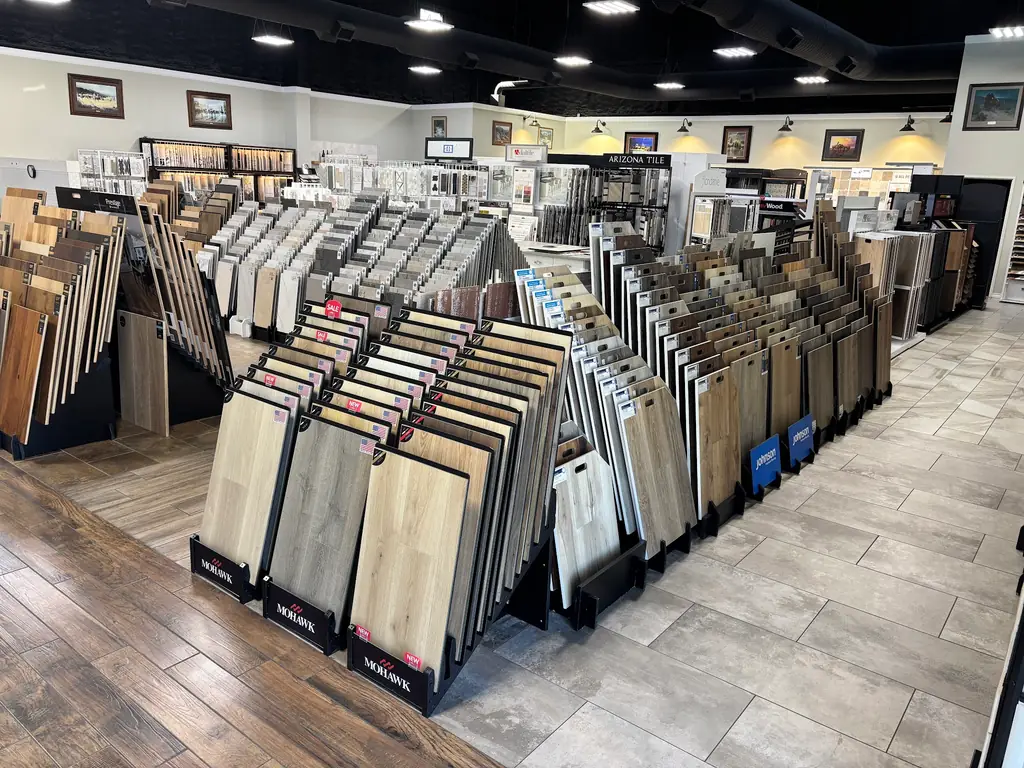
Every flooring showroom will tell you a sample looks great under the lights. What they won't always tell you is how that same plank behaves in August, in a house with the AC cycling on and off, sitting on a slab that never really stops moving. We've been doing this in Belton long enough to know the difference matters more here than in a lot of the country.
Slab-on-grade is the starting point, not a footnote
Most homes in Belton, Temple and Killeen are built on slab foundations, and most of those slabs sit on blackland clay or a close relative of it. That clay expands when it's wet and shrinks when it dries out, and it does both every year, sometimes every season. The slab above it moves with it, just a little, but a little is enough to matter to a floor that's glued or nailed down tight.
This isn't a reason to avoid hardwood or tile. It's a reason to be honest about which products handle that movement well and which ones need a little more room to breathe. Solid hardwood direct-nailed to a slab is a harder path than engineered hardwood floated or glued over a proper underlayment. It's not that solid wood can't work, it's that engineered construction was built to deal with exactly this kind of seasonal movement, and on a slab that's moving under it, that construction advantage is worth something real.
Humidity swings do more than warp wood
Central Texas doesn't stay humid the way the Gulf Coast does, but it swings hard. A muggy June gives way to a bone-dry August, and your floor sits through all of it. Wood floors take on and release moisture as the air around them changes, and if a floor was installed without acclimating to the house first, that swing shows up later as gaps, cupping or a board that's just slightly proud of its neighbors.
Acclimation isn't a sales pitch, it's just letting the material sit in the actual room, at the actual humidity, for long enough that it stops adjusting before it's fastened down. We build acclimation time into the schedule on hardwood and laminate jobs specifically because Belton's swings are real enough that skipping it shows up in a callback six months later, and nobody wants that, us included.
Where tile and stone actually have the advantage
Porcelain tile and natural stone don't care about humidity the way wood does. They're dimensionally stable across the temperature and moisture ranges a Belton house sees, which is part of why they're such a common choice in kitchens, entries and bathrooms here, not because they're trendy but because they hold up. The tradeoff is the grout and the substrate underneath, which is where a slab's small seasonal movement actually shows up if the prep work was rushed.
A crack isolation membrane under tile on a slab isn't an upsell, it's a real answer to a real problem. It gives the tile a thin, flexible layer that absorbs the tiny amount of movement coming up from the slab so it doesn't telegraph straight up into the grout lines as hairline cracks two years later. We use it on slab installs where the room size or the slab's history calls for it, and we'll tell you plainly when we don't think you need it too.
What this means for the room you're actually redoing
A sunroom or a room with a lot of west-facing glass in Belton runs hotter and dries out faster than the rest of the house, and that's worth mentioning when you're picking a floor for it, not after. A kitchen that floods a little every few years from a dishwasher hose is a different conversation than a formal dining room that never sees water. None of this is complicated once someone actually asks about the room instead of just measuring it.
That's really the point of a design consultation before an install. You pick a color you like off a board, then you talk through which room it's going in, what the slab's done in the past if you know, and what the sun does to that side of the house in July. We carry Shaw, Mohawk, COREtec, Daltile and a dozen other lines specifically so there's a real answer for whatever that room turns out to need, instead of one product pushed at everybody.
If you're weighing options for a room in Belton, Temple, Killeen, Harker Heights or Salado, come look at the samples in person. Under real light, on a board you can actually pick up, the differences between products get a lot easier to see than they do online.
Bell County Flooring — (254) 254-0074
Call (254) 254-0074More articles
"Waterproof" Isn't One Thing: What SPC, Porcelain and Sealed Stone Each Really Resist
The word "waterproof" covers three very different materials with three very different answers to a real spill or a real flood.
Open-Plan Floors: Why the Transition Matters More Than the Sample
A gorgeous plank means very little if the transition into the next room breaks the whole layout in half.